Why a $1,000 Online Installment Loan Can End Up Costing Almost $5,000
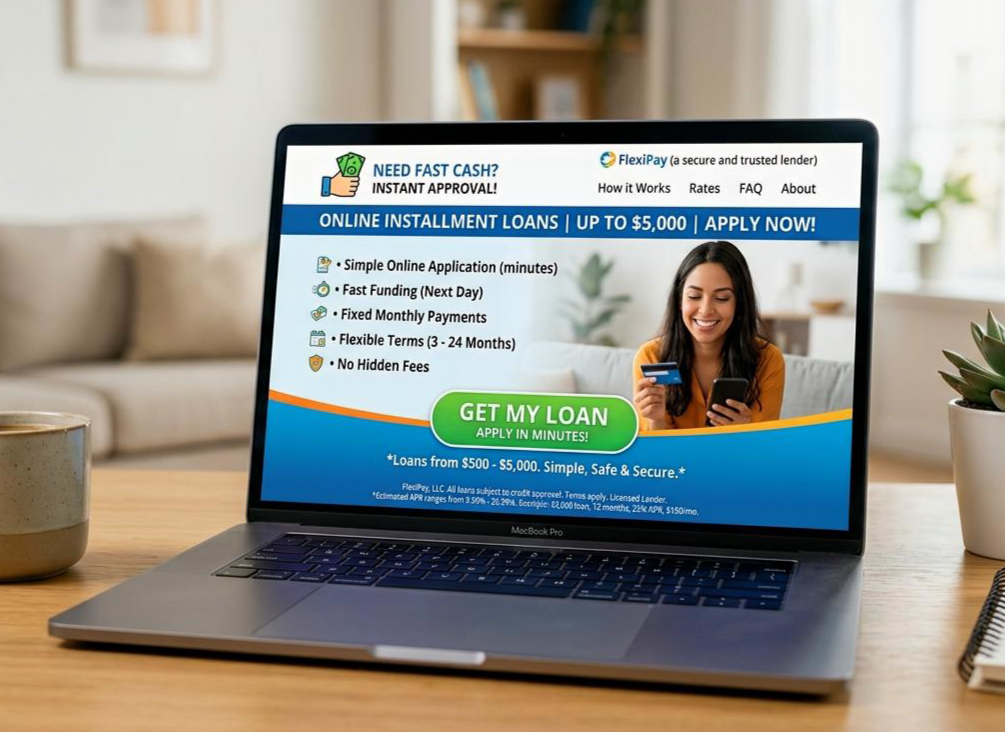
When you are living paycheck to paycheck, an unexpected car repair, medical bill, or utility shortage can feel like an absolute crisis. In those moments of high stress, taking out an online installment loan or payday loan promises a quick, painless lifeline.
They promise fast cash when you need it most—but the long-term cost of an online installment loan is often hidden in the fine print. Let’s take a look at the brutal math behind a real, standard 24-month online installment loan disclosure to see exactly how the trap operates.
Deconstructing an Online Installment Loan Disclosure
Every legitimate lender is required by law to provide a breakdown of the true cost of your credit. However, these tables are often breezed past during a hurried online application process.
Here is what the real math looks like on a typical $1,000 high-interest installment loan:
Disclosure Metric
What It Means
The Real Cost
Amount Financed
The actual cash provided to you or paid on your behalf.
$1,000.00
Annual Percentage Rate (APR)
The total cost of your credit expressed as a yearly rate.
688.39%
Finance Charge
The total dollar amount the credit will cost you in interest and fees.
$3,987
Total of Payments
The absolute amount you will have paid after making all scheduled payments.
Think about those numbers for a moment. To get $1,000 of immediate relief, you are legally binding yourself to hand back nearly $5,000 over the course of two years. You are paying roughly four times the original loan amount just in interest and fees.
Many high-interest installment loans are structured so that a significant portion of the early payments goes toward finance charges, causing borrowers to make little progress reducing the principal balance.
Continuous Bank Withdrawals: Lenders require automated clearing house (ACH) access to your checking account. Every payday, they automatically pull their payment, frequently leaving you short on basic necessities like rent, groceries, or gas.
Borrowing to Pay Borrowing: Because the automated withdrawals drain your account, you are forced to take out a second or third payday loan just to survive the month, compounding the debt.
The Threat of Wage Garnishment: If your account overdraws or you try to stop the cycle, lenders quickly shift to aggressive collection tactics. Some lenders include voluntary wage assignment provisions or may threaten legal action after a default. Whether wage garnishment is actually available depends on state law, the loan agreement, and whether the lender obtains a valid court judgment.
If you currently have an online installment loan with a triple-digit APR, it is easy to feel entirely helpless. But you need to know that you have options, and you do not have to fight these predatory terms alone.
Some online lenders operate through complex legal structures or tribal affiliations, leading to disputes over whether state lending laws apply. Depending on the lender and your state, certain loan terms or collection practices may be legally challengeable.
At National Client Shield, we specialize in confronting predatory lenders head-on. We review your loan paperwork line-by-line, challenge unenforceable terms, help you take steps to stop recurring bank withdrawals, and build a concrete strategy to halt the harassment.

*By accessing this site, I agree and understand the following statements: * National Client Shield or its representatives may contact me by email, phone, or SMS at the email address or number I provide, including for marketing purposes. * All calls with the company may be recorded or monitored for quality assurance and training purposes. * Not all debts are eligible for enrollment. Not all clients complete programs for various reasons, including their ability to save sufficient funds. Estimates are based on prior results, which will vary based on specific circumstances. We do not guarantee that your debts will be lowered by a specific amount or percentage or that you will be debt-free within a specific period of time. We do not assume consumer debt, make monthly payments to creditors or provide tax, bankruptcy, accounting, or credit repair services. Though our site may recommend credit repair services. * National Client Shield is not a law firm, nor is it a substitute for an attorney or law firm. We do not provide legal advice, nor do we practice law. This site only contains legal information, not legal advice. Using this site does not create an attorney-client relationship. We provide no guarantees regarding case outcomes, nor are we liable for any case outcomes. Use of our products is governed by our Terms of Service and Privacy Policy. * Not available in all states. Please contact a tax professional to discuss the tax consequences of settlement. Please consult with a bankruptcy attorney for more information on bankruptcy. Depending on your state, we may be available to recommend a local tax professional and/or bankruptcy attorney. Read and understand all program materials prior to enrollment, including potential adverse impact on credit rating. The company and its affiliates are not lenders, creditors, or debt collectors. * National Client Shield does not give debt consolidation loans. * Our representatives have helped thousands of consumers throughout their careers. Testimonials are actual customer experiences and individual opinions and may not be illustrative of all experiences with the company or its affiliates.